Behind the Scenes: The Life of a Unit Manager in Broadcast (and Why Perfect Planning Prevents P*ss Poor Productions!)
Meet the unsung hero of the broadcast world:
the Unit Manager
The glue that holds the intricate web of live productions together, Unit Managers ensure everything runs smoothly, from setting up equipment to coordinating crew members.
So, let’s pull back the curtain and dive into the fascinating world of broadcast unit management, complete with the top five phrases you’d expect to hear from these orchestrators of on-air magic.
What does a Unit Manager (UM) do?
A UM is a conductor orchestrating the logistical and operational aspects of a broadcast.
They’re the technical project managers of the broadcast world, overseeing everything from the technical setup to staff, and ensuring that all the output whether it’s a news segment, a sports event, or a live concert, goes off without a hitch.
Their key responsibilities include:
#1 Planning and coordination
Before the cameras start rolling, a good UM meticulously plans every detail of the broadcast.
This includes liaising with producers, directors, and all the various technical teams to ensure that all necessary equipment and personnel are in place.
They are the bridge between creative visions and technical execution.
#2 Technical oversight
From cameras to microphones, and satellite trucks to editing suites, the UM ensures that all equipment is functioning perfectly.
They troubleshoot technical issues and make swift decisions to avoid any potential disruptions to the broadcast schedule.
#3 Team management
A broadcast unit is like a well-oiled machine, and the UM is the one keeping it running.
They manage a diverse team of technicians, camera operators, sound engineers, and other crew members, ensuring everyone knows their role and is ready to perform.
Think of it as a temporary business which relies on teamwork for success.
#4 Budget management
Balancing creativity with cost-effectiveness is a tricky task, but the UM is adept at managing budgets, and ensures that the broadcast meets its financial parameters without compromising on quality.
#5 Crisis management
When things go wrong (and they can), the UM is the first to jump into action.
Whether it’s a technical glitch, a missing piece of equipment, or a personnel issue, they are hugely skilled at quick and calm problem-solving to keep the schedule on track.
A day in the life of a Unit Manager
Imagine waking up knowing that today, you’re responsible for broadcasting a major live event.
The day starts early, often before dawn.
First on the agenda is a coordination meeting with key team members to review the day’s schedule, identify potential issues, and finalise plans.
Next, it’s off to the site.
Whether it’s a studio or an outdoor location, the UM arrives to oversee the setup.
They check in with the technical crew to ensure all equipment is ready and conduct final tests on vision, audio, graphics, replay, and communication systems.
The mantra here is simple: “If something can go wrong, it probably will,” so double, even triple-checking is crucial.
As the rehearsal and broadcast time approaches, the UM is a hive of activity, managing last-minute adjustments, troubleshooting unexpected problems, and communicating with the director and producers.
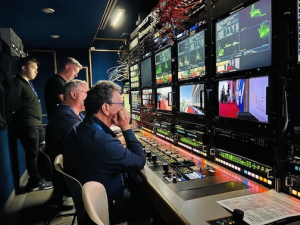
Once the broadcast begins, they monitor everything from a control room or on-site, ready to address any issues that arise.
After the broadcast, the UM conducts a debrief with the team, discussing what went well and what could be improved for next time.
The day ends with a sense of accomplishment, knowing they’ve successfully delivered another seamless broadcast.
“Legends in the industry, Unit Managers are known for their calm, practical and unflappable nature. While technically very skilled themselves, a quality Unit Manager knows what they don’t know – it’s a real strength.”
Ken Coppel, JACKSHOOT
Top 4 phrases you’d expect to hear a Unit Manager say
1 “What’s our backup plan?”
Always prepared for the unexpected, the UM ensures there’s a Plan B (and sometimes C) for every possible scenario.
2 “I need an ETA on that feed”
Timing is everything in broadcasting. The UM constantly coordinates with various teams to ensure everything is delivered on time.
3 “I get to look after the bins and chairs!”
When everything is running smoothly on site there is nothing else to do except make sure everyone is comfortable and the bins get emptied!
4 “Great job, everyone!”
After a successful broadcast, acknowledging the hard work and effort of the team is essential.
The UM knows the importance of boosting morale and celebrating victories, big or small.
Both challenging and rewarding, the role of a Unit Manager is critical in EVERY single television and live broadcast.
Their ability to juggle multiple responsibilities, manage crises, and lead a team makes them indispensable in the fast-paced world of broadcasting.
“Here’s to the legends of the industry that are the Unit Managers!”
Team JACKSHOOT